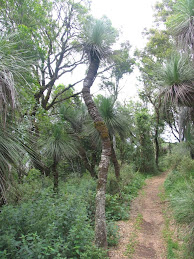
Grass Trees 5 & 6... an Update
I think these plants are now approximately
3 1/2 years old + maybe 1 year...
I'm not sure, I bought them at a garage sale!
These two little ones gave me the idea to try
growing some more plants with the seeds collected from
Grass Tree No.1 growing in my front yard!
An altogether successful venture, both in achievement and results!

This is Grass Tree No. 5 which is still slightly
smaller the the one below!!

Grass Tree No. 6
If you click on this photo to enlarge you can see it has really started
to thicken in the center!
The leaves are very strong and the same thickness as an adult plant.
I haven't decided yet when to plant these two into the garden,
maybe another 6 months!!!
***************************
This beautiful Blue Tongue Lizard
lives just behind our back fence... and came visiting.
No doubt looking for snails, bugs and other garden pests etc.
To read more about these lovely animals click here
After having a look at him we let him go back under the fence
and have seen him a couple of times since going about his business.

*******************************
Another lovely Green Tree frog
perched on the spouting...
Nearby an outside light draws small flying insects.
An attraction providing supper!

*********************
Seeds
I have collected seeds from my Grass trees No. 2 & 7 in late 2009...
and I have possibly 100 seeds to Give Away.
If anyone would like to try raising their own little plants!
I am happy to send you some. (Australia only.)
Bearing in mind people...these plants take a long time to grow!
(Although the seeds can be fast to come up - 2-8 weeks)
Perhaps 20 each or less ... depending on response!
(I have no idea about sending seeds OS quarantine etc. so I'll stay out of that!)
I can't guarantee they will be viable seeds,
however I have an idea which ones look goer's by now,
the big fat ones!
Send an email to me with your name and address
and how many you would like!
clockyer@tpg.com.au
Once I have run out of seeds to give that's it.... till next time I get a new crop!
It seems a waste not give these seeds to someone to grow as
I cannot house any more little plants myself...
although I would love to,
I have enough already!

**********************************************
1 Fatality to report!
I accidentally pulled a little plant out of it's pot ...
I accidentally pulled a little plant out of it's pot ...
The plant had lovely long leaves hanging down and
I caught it on the lid of my rubbish bin!
And hoicked it out of the pot...
broken clean off at the bottom damn!!!
So there are
110 Grass Trees residing at this house!
102 of them seedlings!
102 of them seedlings!
Cheers Carol